search site
countries
all panoramas
BreendonkLa Réunion
Corregidor
Oreshek
Hiroshima
Nagasaki
Hiroshima Dome
Hiroshima Ceremony
Okinawa battle
Okinawa landing
Yasukuni-Jinjya
Manzanar
Tokyo I
Tokyo II
Tokyo III
Pearl Harbor
KL Stutthof
Hürtgen forest
Sant'Anna Stazzema
Stuttgart
Creux-du-Van
Bunker Valentin
Theresienstadt
St-Gotthard railroad
Berlin - Memorial
Roma
Oradour-sur-Glane
Moscow
Al Alamein
Antwerp
Tallinn
Trieste
Hendaye
Coventry
Ebensee
Bastogne
Toulouse
Skæring Hede
St.Petersburg - Nevsky
London
Rab
Maloyaroslavets
Reims
Auschwitz Birkenau
Vienna - Heldenplatz
Gernika
Ryvangen
Vienna - Flaktowers
Nemecka
Brestanica
Maribor
Berlin - streets
Metlika
Hartheim Castle
Ljubljana
Cerkno
Drazgose
Yad Vashem
Berlin - Cenotaphs
Little Haldon
St.Petersburg
Babi Yar
Walcheren
Lommel
Dachau
Arnhem
Hanstholm
contact
e-mailRSS / RSS2 / atom
Trieste
4 panoramas by toni garbasso
Risiera San Sabba
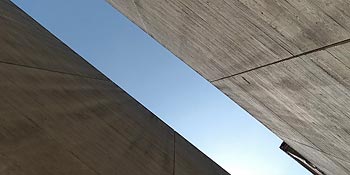
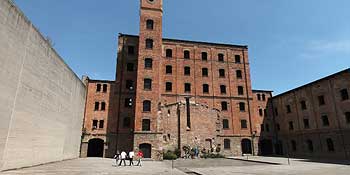
“Risiera di San Sabba” is a former rice-husking facility that was built in 1913 on the outskirts of Trieste. After September 8, 1943, the Nazi occupation forces used the premises as prison camp, headquarters where deported prisoners were sorted out to be sent to Germany and Poland, raided goods depot, prison and extermination camp for hostages, partisans, political and Jewish prisoners. On April 4, 1944 a crematory plant was installed and made operative. In 1965, a decree issued by the President of the Republic raised the “Risiera di San Sabba” to the status of National Monument, and in 1975, were made the restructuring interventions according to architect Romano Boico’s plan.
Risiera San Sabba
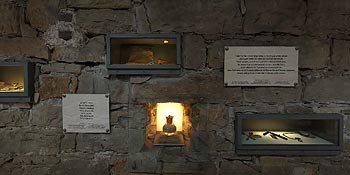
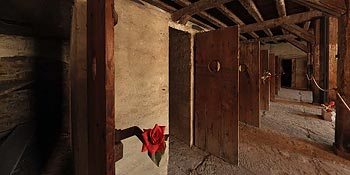
On the left side of the ground floor of the three-storey building housing the dressmaking and shoe-making shops where prisoners worked and quarters for the SS officers and other ranks, were 17 mini-cells used for the detention of up to six inmates each.
Risiera San Sabba
These were set aside mainly for partisans, political prisoners and Jews scheduled for execution in the space of a few days, or sometimes weeks. The first two cells were used for torture or the collection of property confiscated from the prisoners.
Risiera San Sabba
In the inner courtyard, opposite the cells, on the site now marked by a metal plate, was the building housing the oven in which bodies were cremated – its outline is still visible on the main building. The oven, built below ground level, was reached by means of a stair. After using the existing rice-drying facility from January to March 1944 the Germans converted it into a crematorium capable of incinerating a larger number of bodies. The plan was drawn up by the ”expert” Erwin Lambert, who had already designed a number of ovens for concentration camps in Poland. It was tested out on 4th April 1944 with the cremation of the bodies of seventy hostages, shot the day before at the Opicina shooting range.
On the night of 29th April 1945 the building housing the crematorium and the chimney stack connected to it were dynamited by the fleeing Germans to remove the evidence of their crimes, as was their practice. Human bones and ashes were found among the rubble in three paper sacks of the sort used for cement.
Risiera San Sabba
Architect Romano Boico: ”The Risiera,half destroyed by the fleeing Nazis, was squalid, like its surroundings. I thought that this total squalor could rise as a symbol and itself become a monument. I decided to remove and restore
rather than add. After removing the ruined buildings I demarcated the context with 11-metre high concrete walls arranged so as to form a disquieting entrance on the same spot as the existing entrance. The walled courtyard is intended as an open-air non-denominational basilica. The building where prisoners were kept was completely emptied and the load-bearing wooden structures pared down as much as seemed necessary. The seventeen cells and the death cell are unchanged. In the central building, level with the courtyard, is the Museum of the Resistance, minimal but alive. Above the Museum, the rooms of the Deportees’ Association. In the courtyard is a terrible path of steel, slightly sunken – the trace of the oven, the smoke channel and the base of the chimney.”
© 2005 Toni Garbasso
Related websites
From Rete Civica di Trieste.